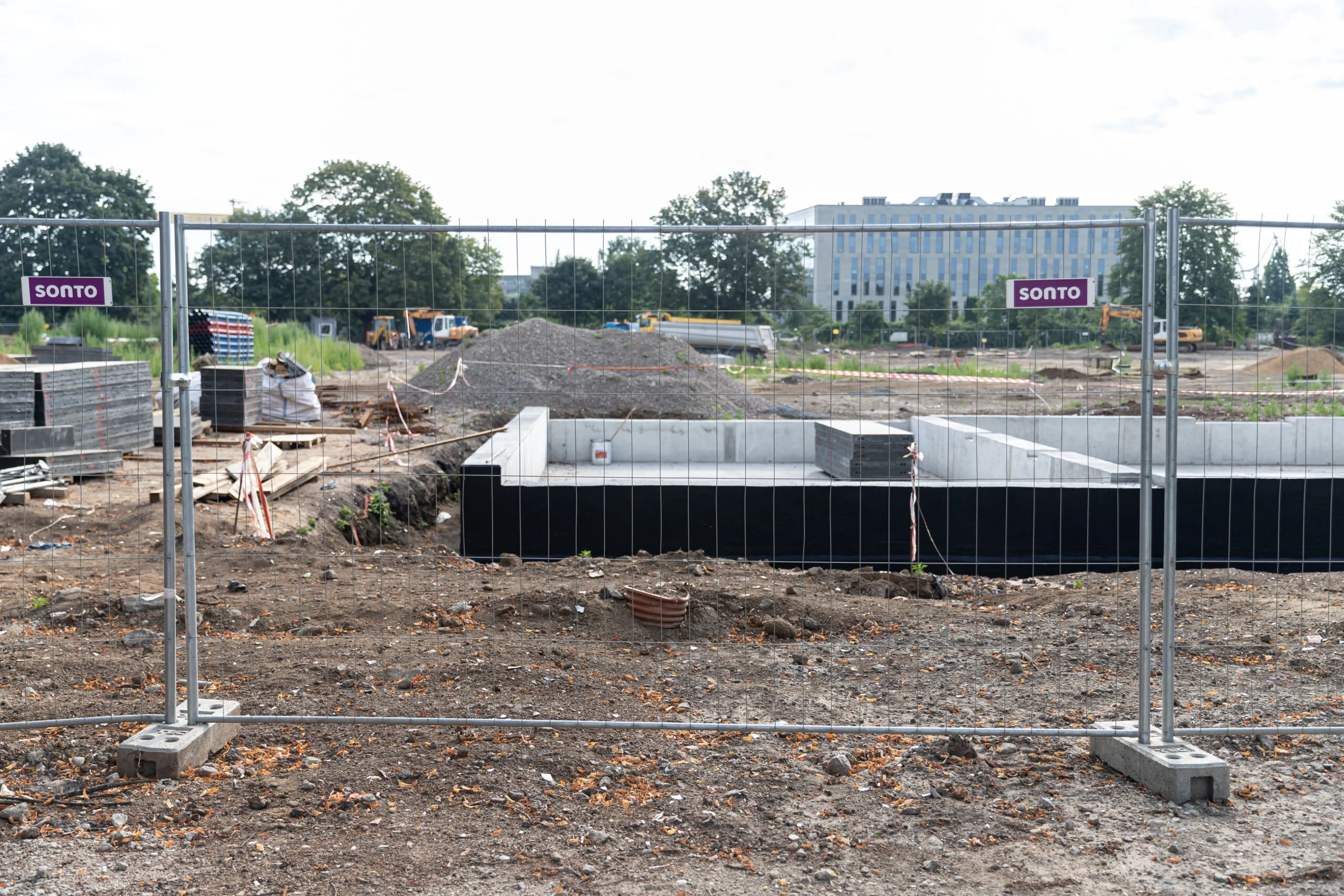
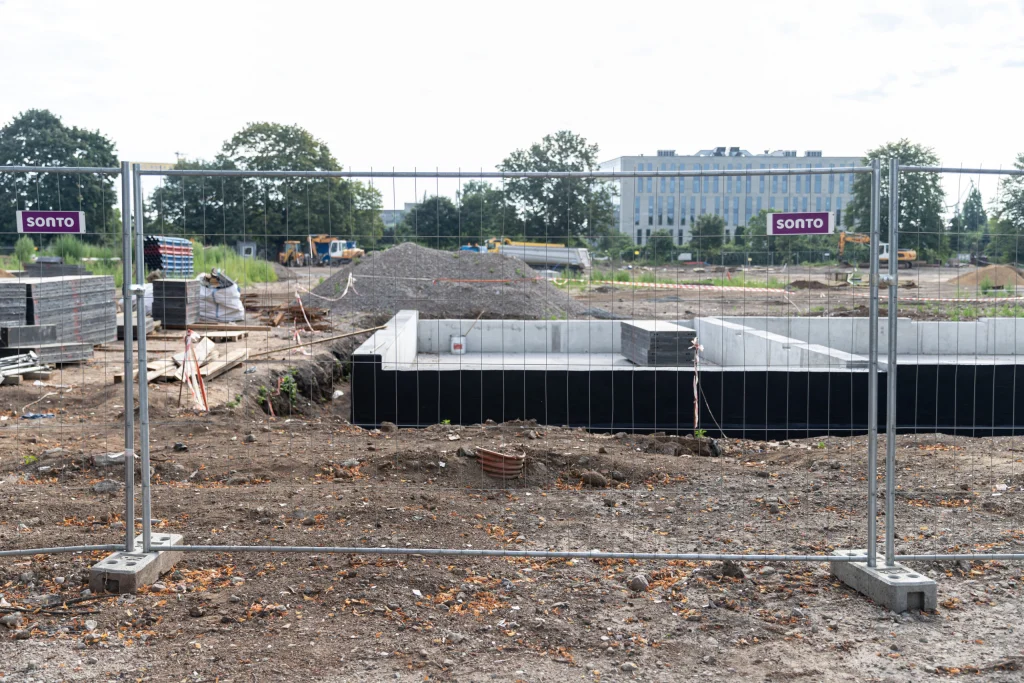
Mesh temporary fencing panels are the most common type of fence on construction sites. They let air through and don’t block the view, go up without foundations and move on to the next project once the works are done. This guide explains how to read panel specifications, how temporary mesh fencing differs from permanent mesh panel fencing and how to put up a line that stands up to wind and attempted theft.
What a mesh fencing panel is made of
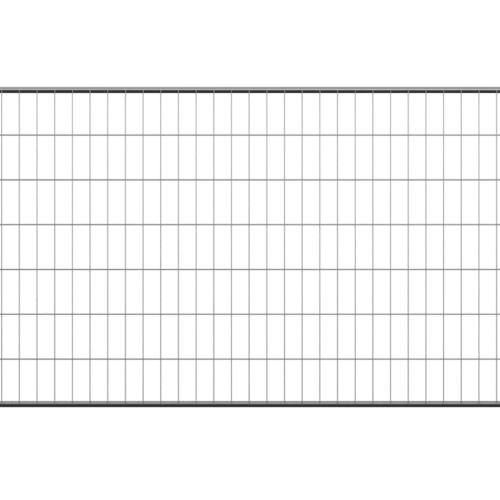
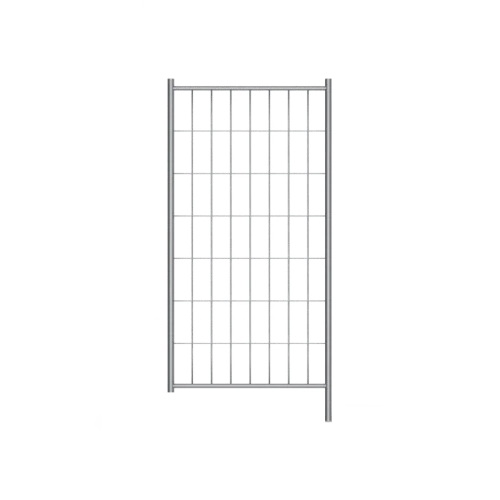
A panel is a steel tube frame filled with wire mesh that is spot-welded or welded to the frame. The whole panel is galvanised, so it doesn’t rust after its first season in the rain. When comparing quotes, check five parameters:
- Size – the standard is 3500 × 2000 mm. The note “in a run” gives the length the panel takes up in an erected fence line.
- Wire diameter – from 2,2 to 3,2 mm in SONTO panels. Thicker wire is harder to cut and bend.
- Frame tube diameter – typically 38 mm for the uprights and 25 mm for the horizontals. The frame decides whether the panel survives being moved again and again.
- Mesh aperture – the tighter it is, the harder the panel is to climb. The ANTICLIMB panel has a 43 × 262 mm aperture.
- Weight – from approx. 10 kg (ECO) to 14 kg (OVAL). A lighter panel means cheaper transport. A heavier one usually has a thicker frame or extra reinforcement.
Manufacturers quote dimensions and weights as approximate, because they can vary slightly in production. If a parameter is critical for you, ask for it to be confirmed with the quote.
Temporary mesh fencing vs mesh panel fencing
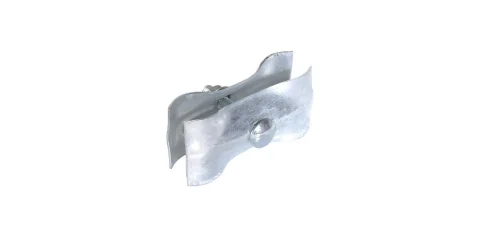
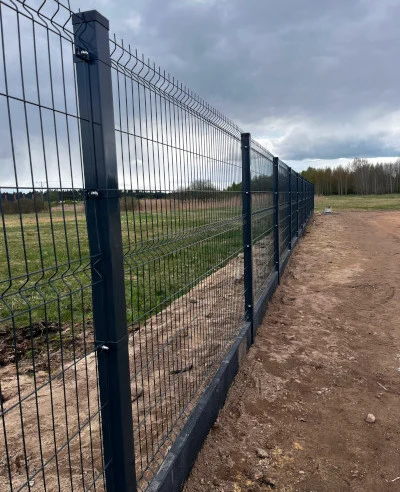
The two look similar but do different jobs. A temporary panel stands in weighted feet and is joined to its neighbours with couplers, so the line can be moved without any groundworks. Mesh panel fencing is a permanent solution: the panels are fixed to posts set in the ground or in concrete. It is chosen for the lasting enclosure of a plant, car park or warehouse. For a construction site that will be gone within a year, temporary mesh fencing is the choice.
How to put up a fence line
- Set out the fence line and the gate positions. Remember that Polish rules require materials to be stored at least 0,75 m from the fence.
- Lay out the feet. Each foot has two holes and joins two adjacent panels, so for n panels you need n + 1 feet.
- Stand the panels in the feet and fit a coupler at every joint. At corners and changes of direction, the reinforced CORNER panel works well.
- Close off an irregular boundary with the SHORT panel (2195 × 2025 mm).
- Add side stays where the line is exposed to wind and anchor them with a ground pin, a ground stake or an anchor.
- Fit the vehicle gate and the pedestrian gate, then walk the line and check that every coupler is tightened.
Wind, sheeting and advertising
Bare mesh catches little wind, because the air passes through it. That changes once a tarpaulin, dust screen netting or an advertising banner goes up on the panels. The whole panel surface then acts like a sail, and the line needs more stays and heavier feet.
Buy or hire
For a refurbishment or an event lasting a few weeks, hire usually makes more sense. For a long build or several projects in a row, buying pays off, because the same panels go up again and again. SONTO sells and hires out mesh temporary fencing and also provides installation. We cover the full panel range, from ECO to LOW, in our article on choosing site fencing.