


Pedestrian Guardrails
Pedestrian guardrails in galvanised steel keep people on the footway and away from traffic at crossings, junctions, stops and tram lines.
-

End Post for Solid Infill Pedestrian Guardrail
33,33 € excl. 23% VAT40,99 € incl. 23% VAT -
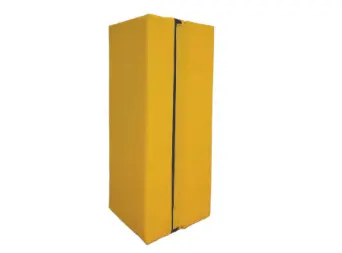
Flexible Column Protector
Request a quote -
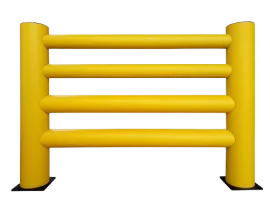
Flexible Safety Barrier Aries
Request a quote -
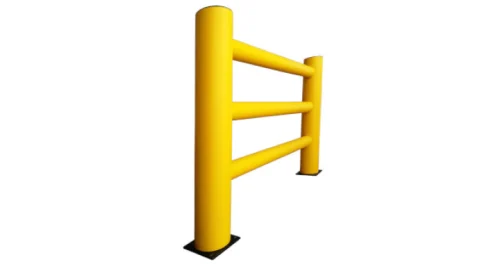
Flexible Safety Barrier Gemini
Request a quote -
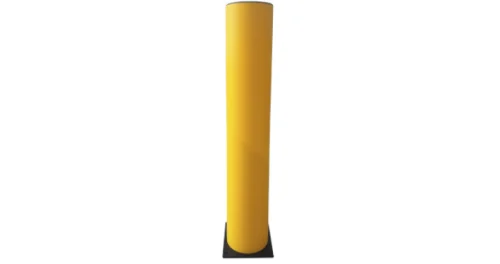
Flexible Safety Barrier Rocky
Request a quote -
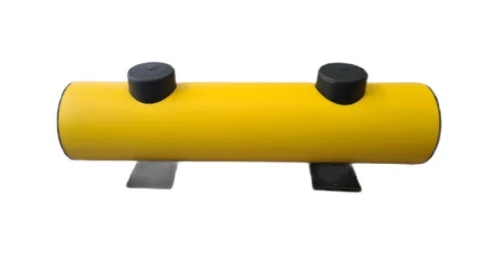
Flexible Safety Barrier Taurus
Request a quote -
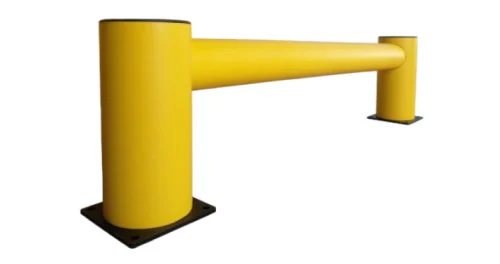
Flexible Safety Barrier Ursus
Request a quote -
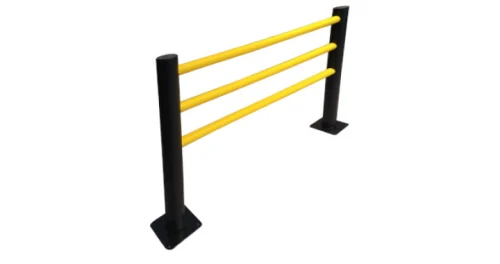
Flexible Safety Barrier Virgo
Request a quote -
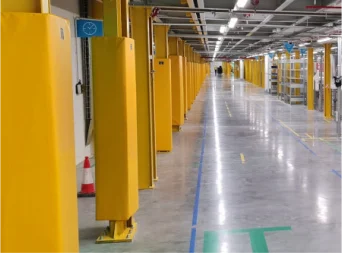
Foam Column Guard
Request a quote -
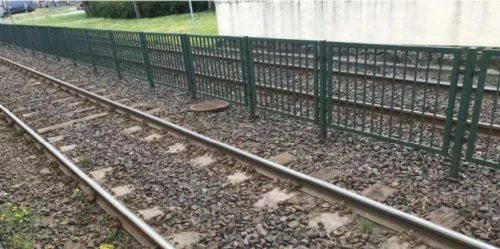
Guardrail Post for Tram Stops
Price range: 17,88 € through 18,69 € excl. 23% VAT Price range: 21,99 € through 22,99 € incl. 23% VATSelect options This product has multiple variants. The options may be chosen on the product page -
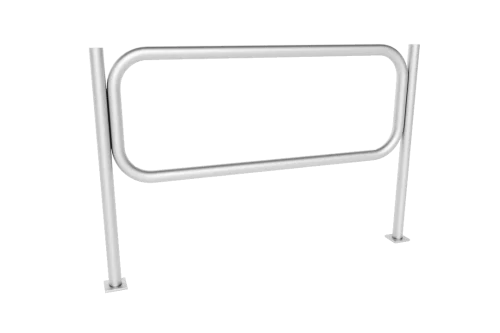
Guardrail Post, Olsztyn Type
Price range: 22,76 € through 26,82 € excl. 23% VAT Price range: 27,99 € through 32,99 € incl. 23% VATSelect options This product has multiple variants. The options may be chosen on the product page -
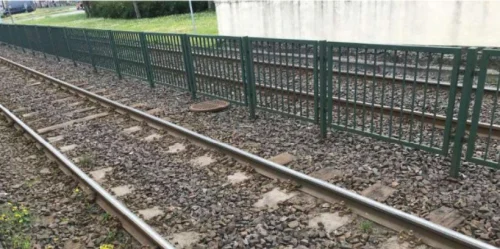
Pedestrian Guardrail for Tram Stops 200×150 cm
Price range: 130,89 € through 151,21 € excl. 23% VAT Price range: 160,99 € through 185,99 € incl. 23% VATSelect options This product has multiple variants. The options may be chosen on the product page -
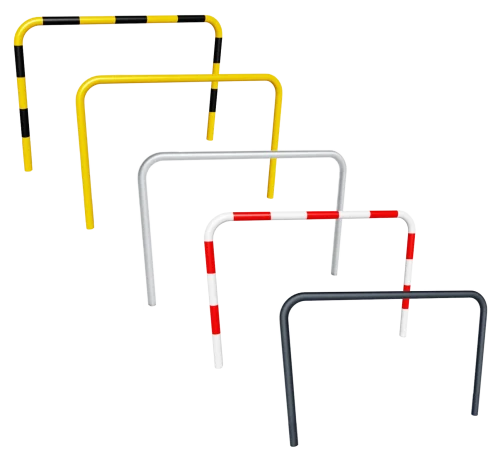
Pedestrian Guardrail U-12a
Price range: 57,72 € through 82,92 € excl. 23% VAT Price range: 70,99 € through 101,99 € incl. 23% VATSelect options This product has multiple variants. The options may be chosen on the product page -
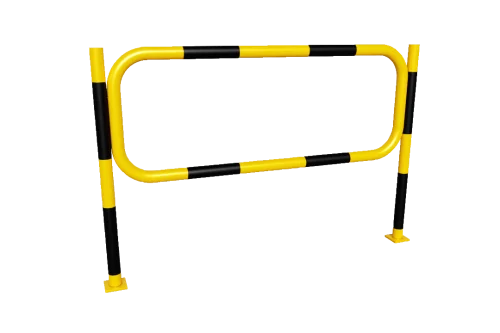
Pedestrian Guardrail U-12a Olsztyn Type
Price range: 42,27 € through 74,79 € excl. 23% VAT Price range: 51,99 € through 91,99 € incl. 23% VATSelect options This product has multiple variants. The options may be chosen on the product page -
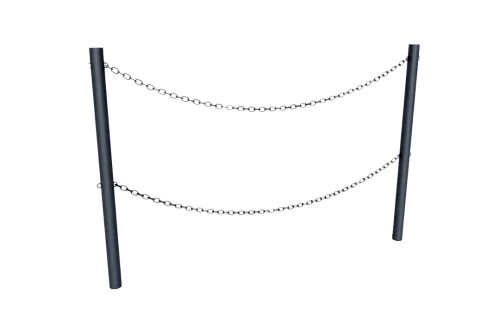
Post and Chain Bollard U-12b
Price range: 52,84 € through 65,85 € excl. 23% VAT Price range: 64,99 € through 80,99 € incl. 23% VATSelect options This product has multiple variants. The options may be chosen on the product page -
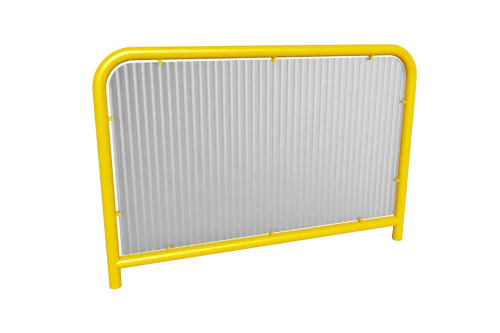
Solid Infill Pedestrian Guardrail
Price range: 153,65 € through 302,43 € excl. 23% VAT Price range: 188,99 € through 371,99 € incl. 23% VATSelect options This product has multiple variants. The options may be chosen on the product page -
Solid Infill Pedestrian Guardrail, Modern Type (Wroclaw)
304,87 € excl. 23% VAT374,99 € incl. 23% VAT -
Solid Infill Pedestrian Guardrail, Retro Type
302,43 € excl. 23% VAT371,99 € incl. 23% VAT -
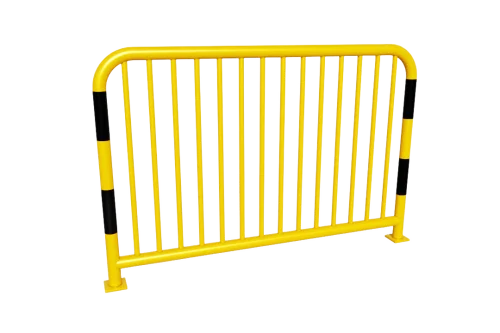
Vertical Bar Pedestrian Guardrail U-11a
Price range: 106,50 € through 122,76 € excl. 23% VAT Price range: 130,99 € through 150,99 € incl. 23% VATSelect options This product has multiple variants. The options may be chosen on the product page
Pedestrian Guardrails
Pedestrian Guardrails: where they are used
Pedestrian guardrails define a protected strip next to the carriageway. They hold people on the footway, funnel them towards marked crossings and stop them stepping into traffic between parked cars or at the corner of a junction. Local authorities and contractors also use them to fence off green verges and areas with restricted access.
On road schemes, the same guardrails organise pedestrian routes around the works. At stops and along tram lines they keep people from crossing the track at uncontrolled points. Every steel design in this category is made in Poland from galvanised steel and is built to stand up to rain, snow and road salt for many seasons.
Which pedestrian safety barriers to choose
The category is split by design. Pick the type by the risk on site and by the character of the street:
- Pedestrian Guardrails U-12a: a tube frame with no cross bar, one cross bar or two, for footways, crossings and junctions.
- Pedestrian Guardrails U-12a Olsztyn Type: an oval of tube inside the frame, set 400 mm into concrete or bolted down.
- Vertical Bar Pedestrian Guardrails U-11a: vertical infill bars no more than 14 cm apart, for school routes, bridges and cycle paths.
- Post and Chain Bollards U-12b: galvanised, powder-coated steel posts joined by chain, to zone off lawns, squares and paths.
- Tram Stop Guardrails: horizontal tubes with vertical bars that separate the track from footways, carriageway and planting.
- Solid Infill Pedestrian Guardrails: a steel frame with multiwall polycarbonate that keeps spray and slush off pedestrians.
- Flexible Safety Barriers: warehouse impact protection made from Hard-flexx® plastic that absorbs shocks.
Galvanised pedestrian guardrails: steel, coating and colour
All steel models start as galvanised tube. Most are then powder coated, and many carry reflective film so the line remains visible at night and in rain or fog. Zinc under a powder coat protects the steel through winters when footways and carriageways are heavily salted.
You can choose warning schemes in yellow and black or red and white, plain hot-dip galvanised steel, or any shade from the RAL chart. That lets you meet local rules or match the street furniture already in place. Black or graphite tends to suit historic centres; warning colours are the usual choice in car parks and on industrial sites.
Concrete-in or bolt-down fixing
Each design is produced for two fixing methods. Concrete-in guardrails give the greatest stability and resistance to impact, which suits permanent layouts. The trade-off is that moving them later means breaking out the foundation. Typical embedment is 30 to 40 cm; the Olsztyn type goes 400 mm deep.
Bolt-down guardrails stand on a base plate with holes and are fixed with expansion anchors to asphalt, concrete or block paving. They go in without digging and can be lifted and reused elsewhere. Near bridges, culverts and other drops, choose concrete-in vertical bar guardrails on a foundation at least 40 cm deep in C20/25 concrete or stronger.
Sizes, tube diameters and model names
Panels come in 150 and 200 cm lengths, made from steel tube of 48.3 mm, 60.3 mm or 76.1 mm diameter. The standard height is 110 cm above ground, and vertical bar guardrails are also made 120 cm high. A 48.3 mm tube covers most town-centre footways where the risk of a knock is low; 60.3 mm is the better choice for crossings, bus laybys and busy main roads.
U-12a, U-12b and U-11a are classes from the Polish classification of road safety equipment. Here they serve as model names, while the product name tells you what each guardrail does. Where guard rails must also discourage climbing, pick a vertical bar design: its vertical infill leaves few footholds.
Flexible safety barriers in the same category
One subcategory sits apart from the street products. Flexible Safety Barriers are warehouse barriers made in Poland, with a protective and shock-absorbing function. The column guard and column protector from the same range are made of energy-absorbing foam and fit around existing warehouse columns. Use this range inside buildings; for footways beside public roads, choose one of the steel designs above.
Frequently asked questions
What are pedestrian guardrails made of?
The U-12a, U-11a, post and chain, tram stop and solid infill designs are galvanised steel, usually powder coated as well. Flexible safety barriers are Hard-flexx® plastic, and the column guards and protectors are energy-absorbing foam.
How high is a pedestrian guardrail?
The standard height is 110 cm above ground. Vertical Bar Pedestrian Guardrails U-11a are also made 120 cm high.
Can bolt-down guard rails be moved later?
Yes. They are fixed through a base plate with expansion anchors, so you can remove them and install them again elsewhere. Concrete-in guardrails are a permanent fixing.
What do U-12a, U-12b and U-11a stand for?
They are Polish classes of road safety equipment. We use them as model references; the product name describes the function of each guardrail.