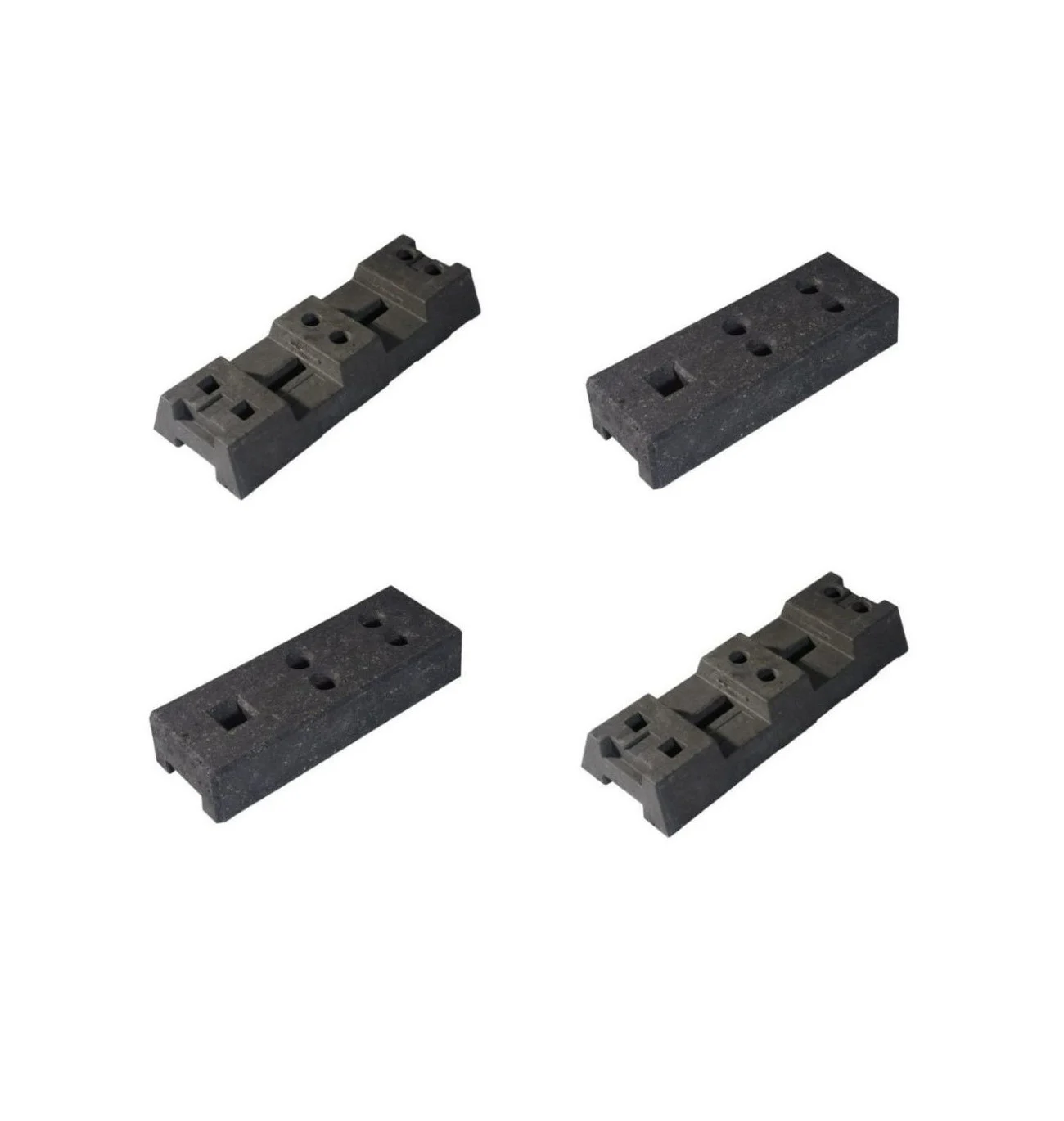
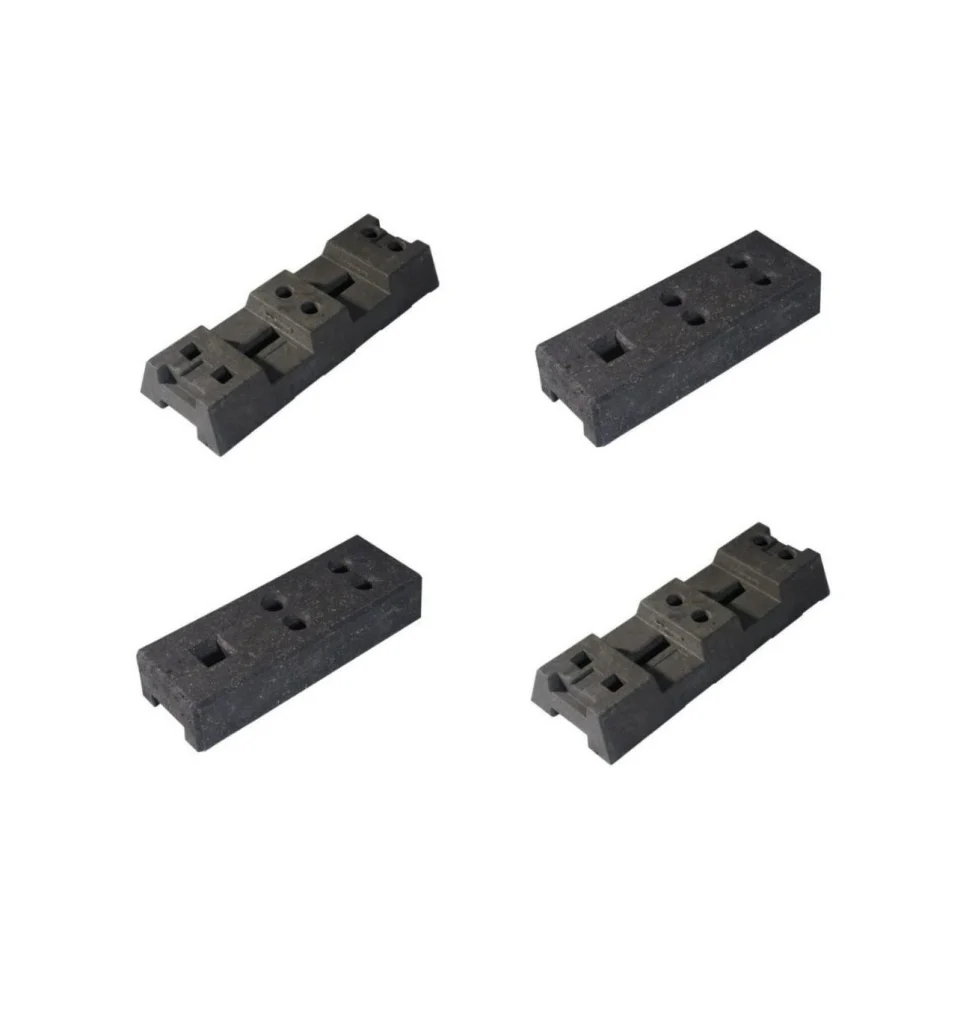
The foot is the least glamorous part of temporary fencing, yet it decides whether the line stands straight. There is one foot at every panel joint, so a long fence needs dozens or even hundreds of them. The choice between concrete and recycled plastic feet affects stability, transport costs and what is left behind after the job.
Two types of foot
- Concrete foot – reinforced, vibro-pressed, weighing 24 or 32 kg.
- PVC foot – made from recycled plastic, weighing 16 or 24 kg.
Both types have two holes for the legs of adjacent panels and fit the same system. You can therefore use both in one line, e.g. heavier concrete feet on a wind-exposed stretch and lighter PVC feet for the rest.
Stability: weight is what counts
A foot holds the panel in place by its own weight. The heavier it is, the more force it takes to push the panel over. The heaviest is the 32 kg concrete foot. On open ground and with panels carrying a tarpaulin, netting or a banner, it is the first choice, and the line is backed up with side stays. Lighter feet are enough for bare mesh in a sheltered spot, e.g. between buildings.
Transport and handling
The difference in weight adds up quickly. A 100 m fence made of 3,5 m panels needs 30 feet. With 32 kg concrete feet that is 960 kg; with 16 kg PVC feet, 480 kg. That means less weight on the lorry and less lifting every time the line is moved. On sites where the fence moves with the works, a light foot saves labour.
Durability and waste
Concrete can chip when it is knocked or dropped. A cracked foot can’t be repaired, and what is left of it is rubble to be taken away. A plastic foot doesn’t crumble like that. It is also made from secondary raw materials, i.e. waste processed into a new product.
Cutting waste on site starts with small decisions like this. We explain more about reducing the environmental impact of temporary fencing in our article on sustainable temporary fencing.
Which foot to choose
- Open ground, wind, screened panels: the 32 kg concrete foot plus side stays.
- Standard mesh in a sheltered spot, frequent repositioning: the 16 or 24 kg PVC foot.
- A long line moved from site to site: the PVC foot, because a lighter load means cheaper transport on every trip.
Both feet are in the Temporary Fencing Accessories category, together with couplers, stays, ground pins, ground stakes and anchors.