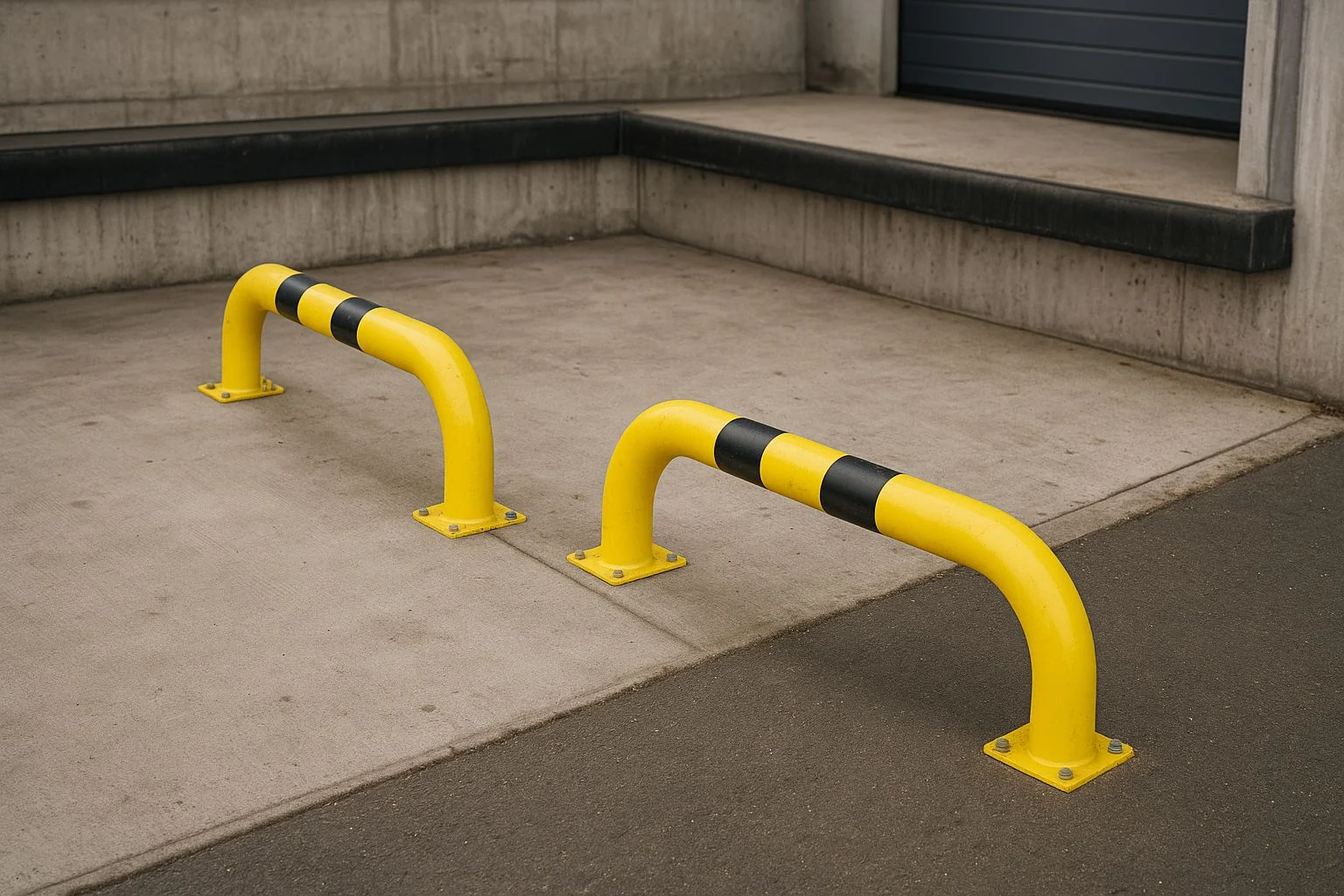
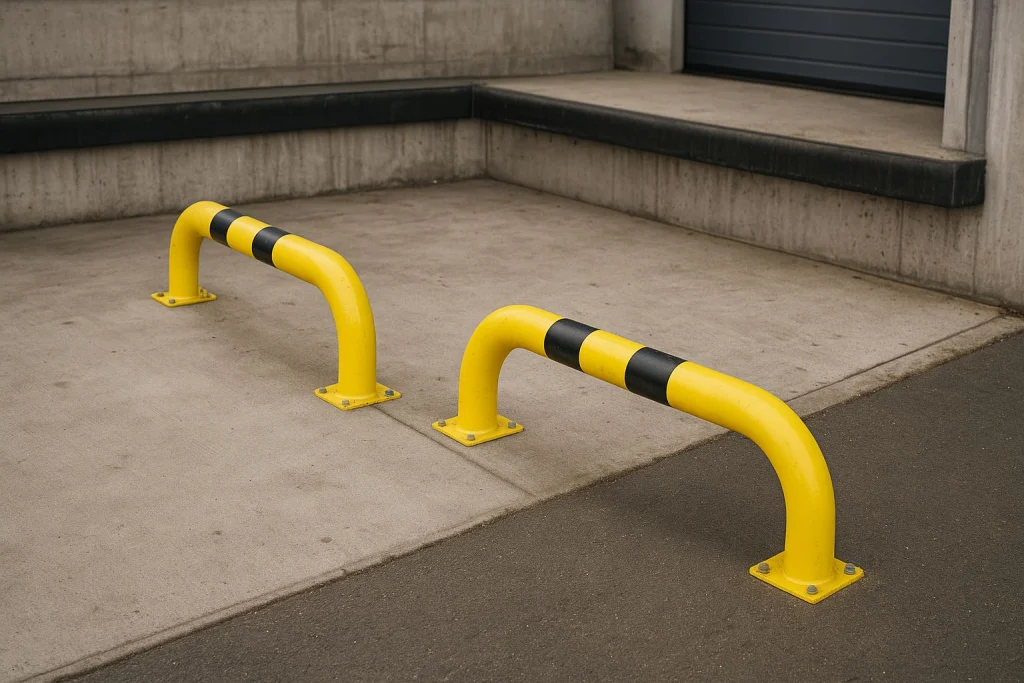
An impact protection barrier is a steel tube or rail bolted to the floor in front of whatever you want to protect. A forklift strike hits the barrier instead of the racking upright, the corner of a wall or a machine housing. Below we describe the types of impact protection, where to use each one and what to bear in mind when installing them.
Why impact protection pays off
Warehouse collisions rarely come down to gross operator error. Usually they result from a narrow aisle, poor visibility at a junction or a slippery floor. You can’t rule these situations out entirely, but you can decide what takes the impact.
A single protector costs little compared with the damage it prevents. A dented racking upright can take a whole bay out of use, and repairing a wall in a working building stops work in that area. After a heavy impact, only the protector is replaced.
Racking uprights and rack ends
Pallet racking carries heavy vertical loads but copes badly with side impacts. The lower part of the upright takes most of the damage: from the forks when picking up a pallet, or from the truck chassis when turning too tightly into the aisle. Two types of protector are used for this zone.
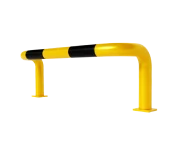
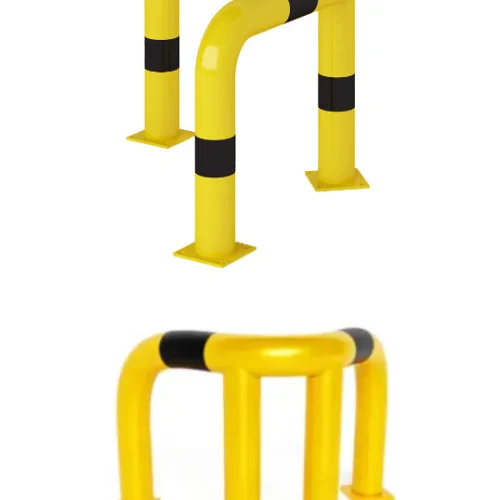
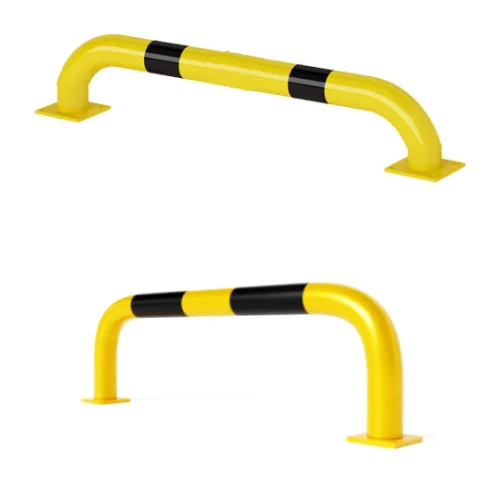
- Hoop barriers – a tubular hoop that shields the upright from the front. The U2 model at 50 × 30 × 30 cm protects small uprights, and at 100 × 30 × 80 cm larger structures. The U3 has the same dimensions plus a third leg that strengthens the structure – for areas with heavier traffic. The tall U4 (40 × 40 × 110 and 50 × 50 × 110 cm) is installed in loading areas.
- Pallet racking protectors – in straight or corner versions, from 400 to 1500 mm long. They protect racking and traffic routes. Anchors hold them firmly in place, but they can be moved when the warehouse is reorganised.
Corners, walls and traffic routes
A truck turning in a narrow corridor easily clips the edge of a wall or pillar, especially when the load blocks the driver’s view. A corner protector is fitted on the edge and stops the concrete from chipping. Our models have arms from 30 × 30 to 50 × 30 cm.
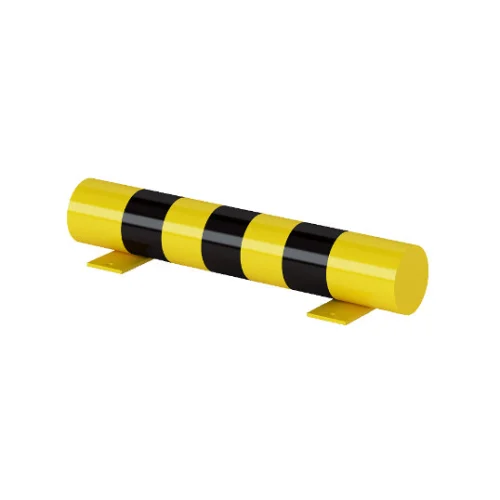
A bumper barrier forms a continuous line of protection along a wall, a machine or a pedestrian walkway. The height is matched to the hazard. The low version, 12 cm, shields the lower parts of machines and racking from wheels. The medium version, 30–60 cm, takes impacts from vehicle bumpers and pallets. The high version, 110 cm, separates entire traffic routes. Segments range from 30 to 240 cm in length. The yellow colour with black stripes also marks out zone boundaries in the building.
Other places worth protecting
- Safety bollards – single posts made of heavy-wall tube, Ø76,1, Ø108 or Ø159 mm, bolt-down or concrete-in. They stand on the floor and stop the truck’s wheels before it reaches the protected spot.
- Wheel guides – 2400 mm tubes fitted in pairs on both sides of a loading bay. They mark the path when reversing, so the driver doesn’t hit the door or the wall.
- Height restrictors – Ø48,3–114,3 mm tubes, 1000–2000 mm long. They warn drivers of reduced headroom, e.g. in an underground car park or inside a building.
- Timber crash rails – 75 × 200 mm timber rails, 1200 mm long, single or double, on steel brackets. The timber cushions the impact with some give and does less damage to vehicles, and a worn rail can be replaced without removing the brackets.
- Lamp post, hydrant and fuel pump protectors – tubular guards around individual fixtures in yards and on petrol station forecourts.
Steel or polymer
A steel protector made of heavy-wall tube bends under a heavy impact and absorbs the energy, but rarely breaks. It copes well with frost and moisture, so it also works in cold stores. After a hard hit it has to be replaced, and part of the force is transferred to the anchors and the floor. Yellow powder coating (RAL 1003) with black reflective tape stays visible even in poor light. In damp or aggressive environments, the galvanised version performs better.
Polyurethane protectors flex and return to their original shape. They don’t scratch the paintwork of trucks and put less load on the anchors. They cost more to buy, but where minor collisions are frequent they need replacing less often. The SONTO range covers steel and timber protectors, flexible safety barriers made of Hard-flexx® and column protectors made of energy-absorbing foam.
How to choose a protector
First decide what you are protecting: a racking upright, a wall, a corner or a machine. Then check what drives past it. In most places a Ø60,3 mm tube is enough. Where counterbalance trucks carry loads of several tonnes, choose Ø76,1 mm tube or heavier, with chemical anchors set deeper into the floor. Underestimating the load is a common mistake. A barrier that is too light fails at the first serious impact, and the floor cracks with it.
Installation and inspections
Protectors are fixed with mechanical or chemical anchors. Before installation, check the thickness and quality of the floor slab. In older buildings the concrete can be thin, contain hidden voids or have a low strength class. In such a base, chemical anchors perform better because they don’t exert expansion forces on the concrete the way expansion anchors do.
An inspection checks anchor tightness, cracks in the concrete around the base plate and deformation of the tube. A steel protector that has bent once won’t take the next impact in the same way, so after a serious collision it is replaced straight away.