Clients increasingly ask suppliers about environmental impact, especially on large projects and on sites seeking an environmental certification. With temporary fencing, three things matter: what it is made of, how many times it can be used and what happens to it when the works are finished.
Steel goes back into the loop
Temporary fencing panels are made of steel. Steel can be remelted again and again without losing its mechanical properties, so a worn-out panel is not waste but raw material for a steelworks. Some manufacturers state the recycled steel content of their products. It is worth asking about it if the project requires environmental documentation.
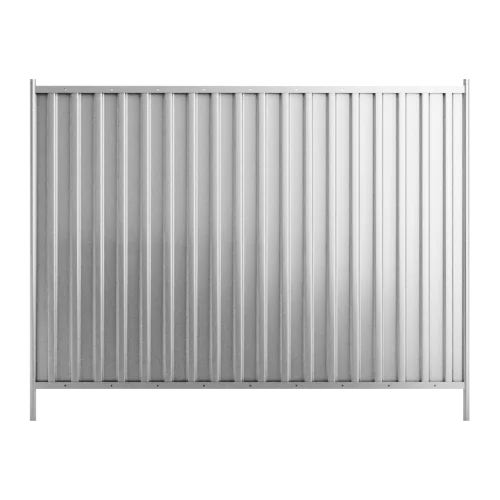
Durability matters just as much. SONTO panels have a frame made of galvanised tube. The zinc coating protects the steel from corrosion, and corrosion is what most often ends the life of a steel product. The longer a panel stays in service, the fewer new ones need to be made.
One panel, many sites
Temporary fencing is by definition a reusable system. Panels drop into feet and are joined with couplers, with no foundations, welding or cutting on site. Dismantling is installation in reverse: when the job ends, no rubble or offcuts are left behind, and every component can be used again.
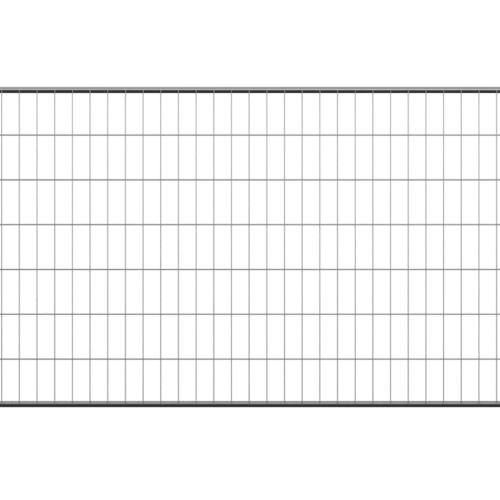
Hire makes the biggest difference. A company that puts up fencing once every few years doesn’t need to buy and store its own panels. When the job is finished, the panels go back to the hire company and on to the next project. SONTO hires out mesh fencing, steel hoarding and temporary barriers, charged per linear metre.
Feet made from recycled plastic
Besides the panels, a fence line uses a lot of feet, one at every panel joint. Alongside traditional concrete feet, we offer PVC feet made from recycled plastic. They are lighter, whereas a damaged concrete foot is rubble that has to be taken away. We compare the two types in our article on temporary fence feet.
Less transport, less packaging
A fence’s environmental footprint also includes the lorries that carry it. A lighter panel and a lighter foot mean more metres of fencing per load. SONTO ships from the warehouse closest to the project, which shortens the journey. When ordering, it is worth asking whether the supplier packs panels on returnable pallets and keeps stretch wrap to a minimum.
Questions to ask your supplier
Claims about “green products” are easy to make and harder to prove. If the project has to report its environmental impact, ask the supplier for specifics:
- whether it runs an environmental management system to ISO 14001,
- whether the product has an Environmental Product Declaration (EPD) stating its carbon footprint over the whole life cycle,
- what the recycled steel content of the panels is and whether a document confirms it,
- whether it offers hire, not just sales,
- whether it takes back worn-out components for recycling.
The answers to these questions tell you more about a supplier than any marketing slogan.