


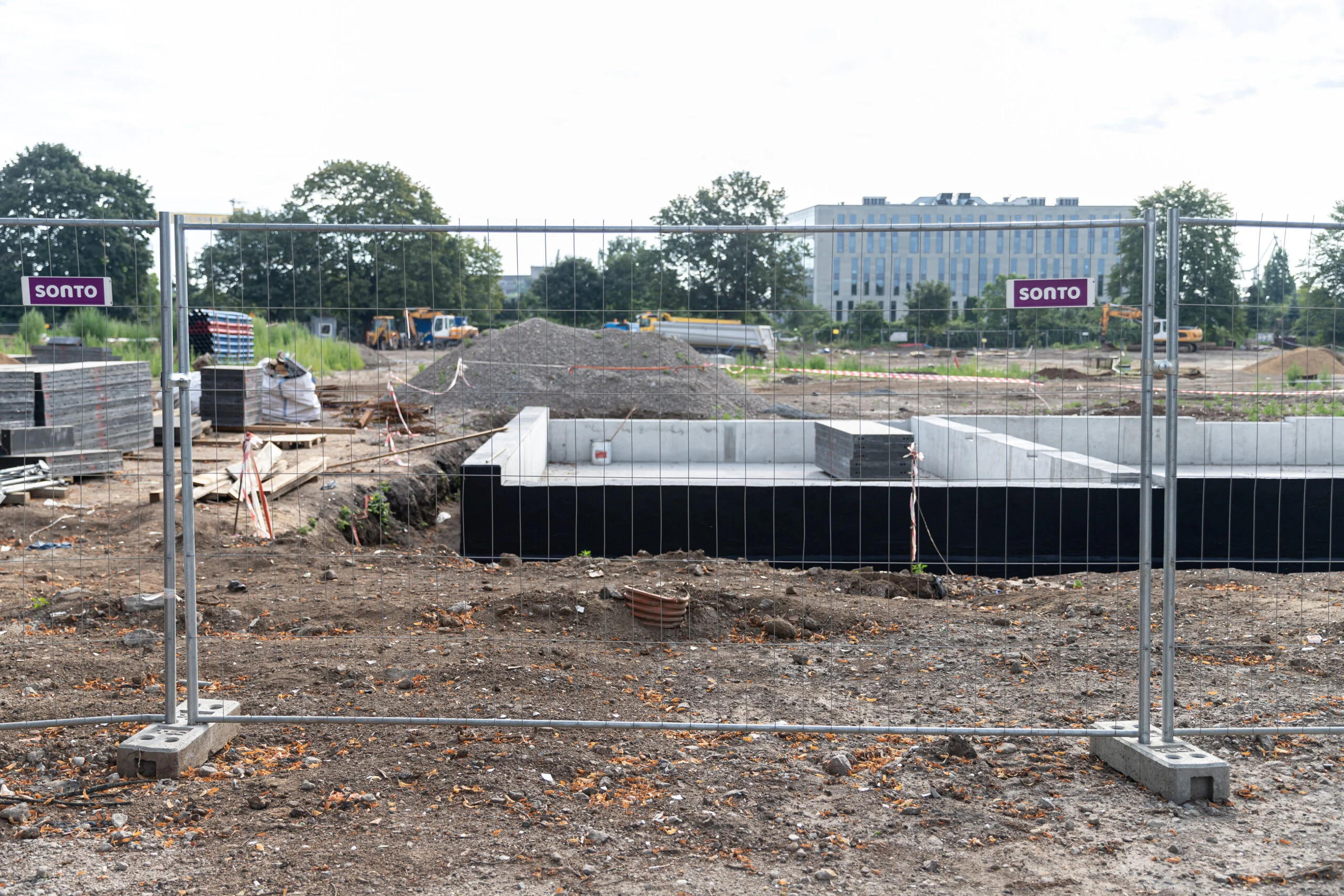
Mesh fencing panels are a solution gaining ever more popularity in construction, in the fencing trade, and among private buyers. They’re characterised by a light, open construction that combines function with good looks. A mesh fence is made up of panels with openings, giving visibility and ventilation while still marking out the boundary of a site.
Why are mesh fencing panels held in such high regard? They’re easy to install, durable, and versatile. Their uses range from building sites, where they serve as temporary fencing panels, to private properties, industrial premises, and event spaces.
Construction mesh fencing versus decorative mesh fencing
Construction mesh fencing is designed with building sites and renovation projects in mind. Usually made from galvanised steel, it offers durability and resistance to damage. These are temporary structures that can easily be relocated. The decorative version — used on private properties or in parks — has a more refined finish, such as powder coating in various colours.
Mesh fencing panels: construction and benefits
Mesh fencing panels are made up of metal bars or mesh forming a lightweight structure. Their modularity lets them be adapted to sites of different shapes and sizes; they’re available in various heights and widths.
Mesh sections and fences: differences and installation options
Mesh sections are ready-made elements fitted onto posts — sturdier, and intended for permanent installations. Simpler mesh fences are ideal as temporary fencing. Installation is possible on concrete, on soil, or on freestanding feet.
Practical applications of mesh fencing
On building sites, mesh fencing provides security while staying open — it doesn’t block airflow when there’s dust about. In private gardens and businesses, it works well for fencing off car parks and industrial areas. It can also serve a decorative purpose: as a support for climbing plants or a way of dividing up zones.
Standard mesh fencing panels
The range includes four panel types: standard (welded, galvanised panel), with crossbar (reinforced panel), oval Roundtop (a welded panel made from two tubes with reinforcements), and low panels at a height of 1,2 m.
Benefits of choosing mesh fencing
- openness and visibility,
- lightweight construction — cheaper logistics,
- durability — galvanised steel or aluminium, resistant to corrosion,
- quick installation and removal.
What to look for when choosing mesh fencing?
Key factors are the materials (galvanised steel, powder coating, aluminium), height, length and panel type — usually around 2 m for building sites, 1–1,5 m for gardens — and certification and regulatory compliance.
Availability: hire versus purchase
Hire is worthwhile for short-term projects such as renovations or events; purchase pays off for long-term use. The decision depends on budget and the planned length of use.